While the economic, social, and political development of the post-war period up to the 1990s was characterized by sustained growth, prosperity, and a certain degree of predictability, the environment in which companies and organizations operate today has fundamentally changed since the turn of the millennium. With the end of the Cold War, the rise of globalization, and, above all, the ongoing digital revolution – including the establishment of social networks – the pace of global dynamics has accelerated dramatically since the early 200
What Does VUCA Stand For?

The acronym VUCA, derived from English, stands for volatility, uncertainty, complexity, and ambiguity. The VUCA world describes a state in which rapid and unexpected changes (volatility), uncertainty about future developments (uncertainty), complex multiple effects (complexity), and a lack of clarity about cause-and-effect relationships (ambiguity) are no longer the exception but the norm. In the context of VUCA, people often speak of the “new normal” – a state of constant change that has permanently replaced the previous status quo.
The VUCA Model in the Context of Consumer Brands
In this VUCA world, brands are more challenged than ever to position themselves clearly and unmistakably. As part of the daily lives of countless consumers, the VUCA environment affects brands – and brands, in turn, influence this environment.
Even long-established brands that have been successful for decades are under pressure and, in some cases, face existential threats to their economic success. At the same time, there are more new brand launches and brand concepts than ever before. In this “age of new brands,” newcomers can establish themselves with consumers in a very short time through disruptive approaches and, in particular, by leveraging new digital communication opportunities – challenging existing market structures in the process.
The fact that consumer behavior itself is being fundamentally shaped by the VUCA environment defines the context in which brands operate. In a VUCA world, consumers’ openness to new things and their willingness to question the established becomes a self-catalyzing system that continuously drives change forward.
Brands must therefore approach this dynamic environment with the awareness that they need to challenge the established and explore new paths – while adopting a clearer positioning than ever before. A clear positioning, along with a brand strategy built upon it, serves as the foundation and prerequisite for successfully addressing the four elements of the VUCA world.
Volatility
A volatile market environment has a significant impact on brands. When trends rapidly evolve or fade, economic conditions change abruptly, or social, economic, or political crises are part of the daily agenda, this affects consumer behavior. Does the brand address relevant needs? Does it reflect the spirit of the times? Does it offer a compelling value proposition at a price appropriate to the circumstances? Does its positioning still reflect relevant aspects? Only brands that can answer these questions have a chance of success in a volatile environment.
Uncertainty
Due to a higher flood of information and an increasingly rapid pace of change, perceived uncertainty is on the rise. Brands have always had to deal with uncertainty, but the simultaneous erosion of numerous influencing factors amplifies this challenge. Market scenarios and early engagement with relevant trends help manage uncertainties, anticipate developments, and develop courses of action in this environment. For brands, agility combined with strategic foresight is essential.
Complexity
What is undisputed is the increasing interconnection of diverse factors relevant to a brand’s success. Whether supply chains, real-time communication media, social trends, economic crises, or global events – everything is interconnected and influences each other. Brands can suffer from this development but can also benefit from it. For example, are all brand activities sufficiently integrated to create synergies? Does the brand respond to current developments while acting in line with its brand values, thereby taking on a position that is meaningful to its target audience?
Ambiguity
What may seem right in one context can appear fundamentally wrong in another. Taking a stance becomes a balancing act – and, in some cases, even a political issue. Brands, in particular, rely on communication as both a medium and a projection surface. What matters most is credibility and a foundation of values that guides the brand’s orientation. Only when a brand’s standpoint is clearly defined can it take a position. Here again, a clear and well-defined brand positioning plays a decisive role, providing all brand stakeholders with clear guidelines for action.
Do You Need Help with the Topic of VUCA?

Challenges and Opportunities of VUCA for Brands
In the VUCA world, consumers look for stability and trust. Brands that are clearly positioned – in content, visuals, and communication – and consistently project this positioning outward provide consumers with an anchor amid constant change. A brand that knows what it stands for and communicates this consistently earns the trust of consumers. In an overcrowded market where consumers face an overload of information, a clear brand message helps to differentiate, position, and remain relevant over time.
VUCA at JUSTBLUE
As an expert in brand development and brand management, JUSTBLUE supports its clients in meeting the challenges of the VUCA world. We firmly believe that a clear brand positioning, strategy, and consistent execution are the decisive success factors for brands. Only with these in place can brands face the challenges of the VUCA world with relevance, stability, trust, and simplicity. At the same time, high agility is essential to respond quickly and successfully to the ever-evolving challenges of the market environment.
JUSTBLUE sees itself as a reliable full-thinking partner, understanding brands in a fully comprehensive and 360° integrated way. Our creative work is always based on a clear vision rooted in brand strategy and aimed at developing the brand’s content further. We refine brand positioning, and our visual execution based on it resonates on a rational level while also appealing emotionally. In our view, only in this way can brand assets unfold their full impact and sustainably influence brand perception.
Our work does not take place in isolation, like in a “black box”; rather, we derive our approach from established brand tools, seek dialogue with our clients, and present our thinking and methods transparently. By integrating our clients into this creative transformation process toward greater brand relevance, we can quickly create tailored, meaningful results that make a real difference in today’s agile VUCA world.
Here, “tailored” is the decisive differentiating factor. There is, of course, no universal recipe for brand success in the VUCA world. However, with deep branding expertise, a high level of strategic understanding, and agility in concept development, JUSTBLUE creates the right approach for building successful brands.
We work within the following framework parameters, which, based on our experience, can serve as a starting point for the strategic development of brand relevance in the VUCA world. A brand’s ability to master the balancing act between stability in times of crisis and ongoing renewal depends on several key prerequisites:
Strong Brand Identity
A clear brand promise, firmly anchored values, and a distinctive brand personality provide a stable framework. This serves as a point of orientation for both internal decision-makers and the target audience.
Target Audience Understanding
A deep understanding of the target audience and their needs is essential. This enables brands to develop relevant and timely innovations that resonate even in times of crisis.
Authentic Communication
Honest, transparent, and consistent communication builds trust. When consumers feel that a brand communicates authentically, they are more willing to embrace change and innovation.
Innovation
To remain innovative, brands must invest continuously and always look for opportunities to improve or expand their offerings.
Successfully combining stability and innovation is undoubtedly a major challenge. However, brands with a clear identity, strong connections to their target audiences, and the ability to adapt to changing circumstances while communicating visibly and relevantly are well-positioned to master this balancing act. JUSTBLUE supports brands in achieving greater relevance through the strategic and creative development of these areas, enabling them to operate successfully and sustainably in the market.
Our VUCA Cases


Lead Agency JUSTBLUE: Your Partner for Holistic Marketing Concepts
As a leading lead agency, we offer you a comprehensive solution for all aspects of marketing. Working closely together, we develop a tailored strategy that fits your company perfectly.
- Naming
- Vision
- Branding
- Digital Branding
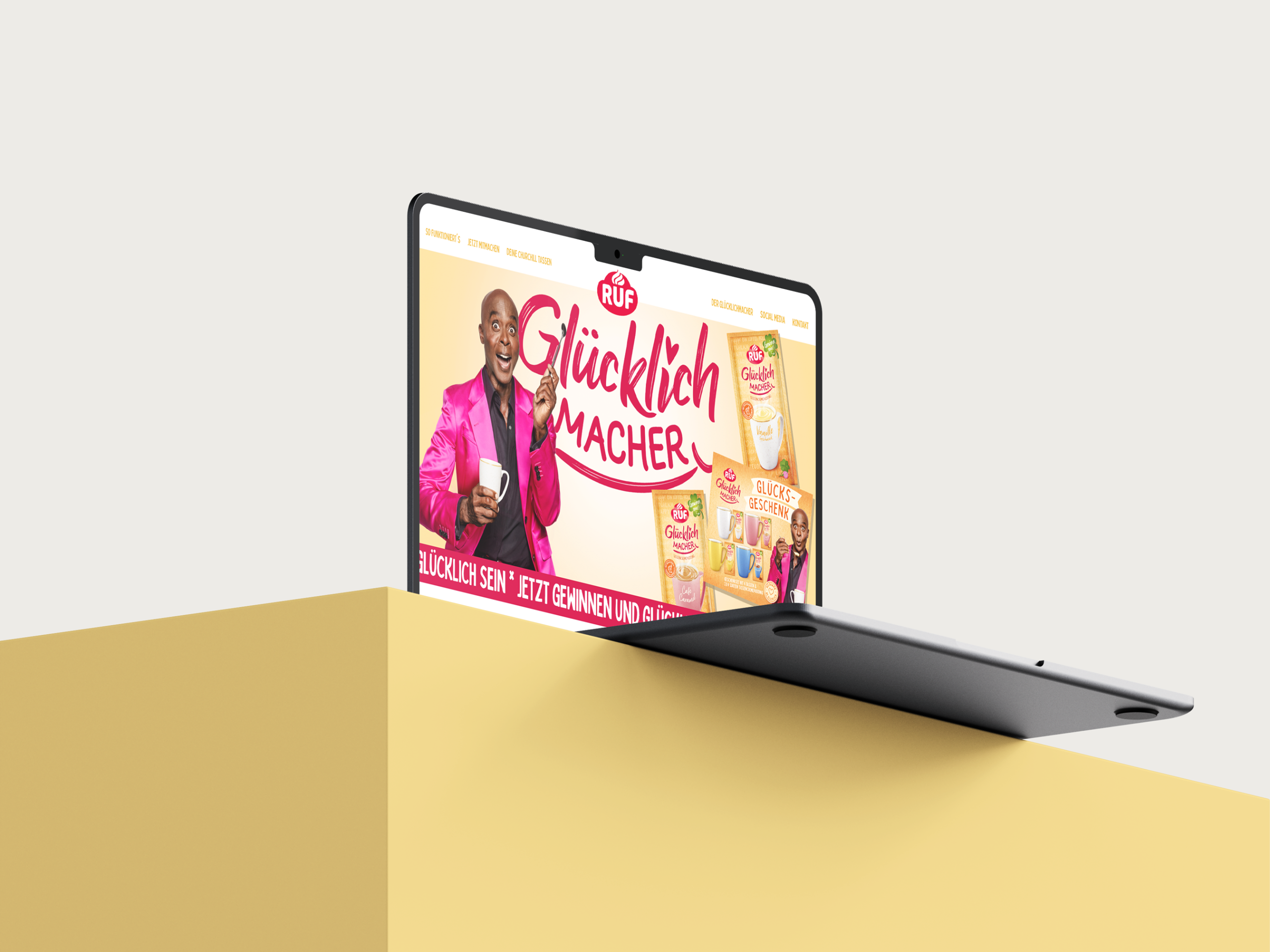
- Landing Page
- Packaging Design
- POS
- Styleguide
- Content Creation
- Content Strategy
Why Do You Need a Lead Agency?
In building brand relevance, alongside insight-based targeting of the audience, coherence is a crucial factor for efficiently developing brand equity. As a lead agency, we not only ensure that the brand is positioned clearly and relevantly, but also that, based on this positioning, all marketing activities contribute to the brand strategy. This enables brands to achieve their goals faster and with fewer resources. It is secondary whether the primary objective is building reach, penetration, or loyalty – all measures must support the positioning and be relevant to the target audience; only then can they have their full effect. The lead agency serves as the central point of contact, either independently developing multiple initiatives in-house or coordinating various specialist agencies or service providers for advertising, public relations, digital marketing, and other areas. The result is an orchestrated implementation of the brand strategy with maximum impact – as we achieved in the relaunch of the dmBio brand.

Tasks a Lead Agency Takes On
Development of the Marketing Strategy
A lead agency works closely with the client to define marketing goals, target audiences, and key messages. It develops a comprehensive marketing strategy that serves as a guide for all marketing activities.
Coordination of Specialist Agencies
The lead agency is responsible for coordinating various specialist agencies or service providers involved in marketing and advertising activities. This may include agencies for advertising, public relations, digital marketing, event management, and more. The lead agency acts as the interface between these service providers and the client.
Management of the Marketing Budget
The lead agency often also manages the budget allocated for marketing and advertising.
Monitoring and Evaluation
Monitoring the results of marketing activities and analyzing them is also one of the lead agency’s tasks. It collects data, prepares reports, and presents them to the client. Based on these analyses, optimization measures are derived to continuously improve the marketing strategy.
Looking for a lead agency?

Our References



Do you want to market your products, services, or brands effectively? An advertising agency helps you achieve your advertising goals and successfully reach your target audience.

The fourth “P”: Promotion – Advertising in the Marketing Mix
A widely used theory in marketing is that of the “4 Ps.” The 4 Ps in marketing describe the four fundamental elements that companies should take into account when developing and implementing their marketing strategies. They stand for:
- Product (Product Policy): This refers to the physical product or the service a company offers. It includes, for example, design, quality, or features.
- Price (Pricing Policy): The price is the amount customers must pay for the product or service. Pricing is a crucial factor in a product’s success: companies must set the right price that is both competitive and profitable.
- Place (Distribution Policy): This refers to the distribution channels and the location where the product or service is made available to customers. This can include physical stores, online platforms, distribution partners, and other points of sale.
- Promotion (Communication Policy): Promotion refers to all marketing and advertising activities aimed at promoting the product or service. This includes, for example, “traditional” advertising.
The fourth P (Promotion / Advertising) is a crucial component of the marketing mix. When developing a marketing strategy for your company, you should by no means neglect it, as effective advertising measures are essential for business success.
Why Advertising Is Important
Advertising plays a central role when it comes to building brand awareness, acquiring new customers, or maintaining a brand image. With advertising, you can …
- raise your brand’s awareness: Advertising enables your company to make its products and services known to a wide audience. Through targeted advertising campaigns, you can boost your brand’s visibility and stay present in the minds of consumers.
- boost sales: Advertising aims to increase the sale of products or services. With effective advertising, you can spark your target audience’s interest, capture their attention, and ultimately lead them to make purchasing decisions.
- build and sustain your brand image: The way a brand is presented in advertising significantly influences the image it leaves with consumers. Advertising allows your company to highlight specific values, qualities, or characteristics in order to create a positive brand image.
- gain a competitive advantage: In a highly competitive market, it is important to stand out from the competition. Through creative and distinctive advertising, your company can achieve a competitive edge.
- reach your target audience: Do you want to specifically address certain target groups? By selecting specific advertising platforms and channels, you can ensure that your messages reach the places where your potential customers are most active.
- convey information: Advertising is an effective way to communicate information about product features, benefits, and offers.
Advertising helps increase your company’s visibility and boost awareness of your products or services.

Why Do I Need an Advertising Agency?
Working with an advertising agency can offer numerous benefits for your company, especially when it comes to developing and implementing an effective and professional advertising strategy.
5 Reasons Why You Should Work with an Advertising Agency
- Benefit from expert knowledge: Advertising agencies typically have professionals with expertise in various areas of marketing, including graphic design, content creation, digital marketing, market research, and more. This comprehensive know-how enables the agency to develop holistic and effective advertising campaigns.
- Stand out from the competition with creative and innovative advertising: Advertising agencies specialize in developing creative and innovative ideas. They bring fresh perspectives to create original advertising messages.
- Save time and resources: Working with an advertising agency allows you to focus on your core business while the agency handles the planning, execution, and monitoring of advertising campaigns. This saves time and resources.
- Leverage access to technologies and tools: Advertising agencies often have access to cutting-edge marketing tools, which they can use to develop effective marketing initiatives.
- Use your budget efficiently: Advertising agencies can help manage your budget effectively. They allocate available resources strategically and can also monitor the return on investment (ROI).
What Tasks Does an Advertising Agency Perform?
There is no one-size-fits-all answer: The main task of an advertising agency is generally to develop advertising campaigns and strategies for clients to promote their products, services, or brands. However, the specific tasks the agency undertakes also depend on the client’s particular requirements. Some advertising agencies specialize in a specific area, while others have a more generalist approach.
The following are tasks an advertising agency can typically handle for you:
- Market research: Who do I actually want to reach? Before developing an advertising strategy, an advertising agency first analyzes the target market and audience, evaluates trends, and monitors competitors.
- Strategy development: Have you already defined your marketing goals? Then it’s time to move on to strategy development. The advertising agency will now create an advertising strategy to achieve precisely those goals.
- Creative development and design: Now it’s time to develop advertising campaigns. This usually requires graphics and other creative content. An advertising agency creates visual elements such as ad creatives, logos, or even packaging.
- Media planning and buying: Which channels do I want to advertise on? The advertising agency handles the strategic planning and selection of media channels to deliver the message of an advertising campaign directly to the target audience. The goal of media planning is to distribute the advertising message efficiently and effectively by selecting the most suitable media and advertising spaces.
- Online marketing: Do you also want to run online advertising campaigns? An advertising agency can support you here as well by developing online campaigns. This includes, for example, advertising on social media or in Google search.
- Public Relations (PR): An advertising agency can also take on a variety of PR tasks to maintain the client’s image. This includes, for example, maintaining relationships with media representatives, writing and publishing press releases, or collaborating with influencers to increase the company’s reach and credibility.
- Campaign management: Of course, in addition to implementation, monitoring and adjusting advertising campaigns are also part of an advertising agency’s tasks. The agency analyzes campaign results and derives optimization measures.
- Brand development: Advertising agencies help in developing and maintaining a brand identity. They create strategies for brand positioning.
- Event management: Do you want to organize events, trade shows, or promotional activities? An agency can support you in doing so.
- Analysis and reporting: To measure the effectiveness of advertising activities, an agency can create reports on campaign performance.
How Do I Find a Good Advertising Agency?
Choosing the right advertising agency can be crucial to the success of your marketing campaigns. Here are some steps that can help you find a good advertising agency:
- Define your goals: Before looking for an advertising agency, clarify your goals and expectations. Consider what type of services you need, which target audience you want to reach, and what results you aim to achieve.
- Research: Use online resources to search for advertising agencies in your region or within your field of expertise. You can also seek recommendations from business partners, colleagues, or friends.
- References and reviews: Check the references and client reviews of the agencies you are considering. This will give you insight into other companies’ experiences with the respective agency.
- Portfolio: Take a look at the agency’s portfolio to get an impression of their work. Pay attention to whether they have experience in your industry and with similar projects.
- Agency size and resources: Consider whether you prefer a large, established agency or a smaller, specialized one. Larger agencies may have more resources, while smaller agencies are often more flexible and offer a more personal approach.
- Expertise: Make sure the agency has expertise in the relevant areas, whether it’s digital marketing, social media, graphic design, or other specific services you require.
- Communication: Working with an advertising agency requires good communication. Check whether the agency listens well, understands your needs, and is able to present clear ideas.
- Budget: Clarify your budget in advance and discuss it with potential agencies. A transparent discussion about costs and fees is important to avoid misunderstandings.

JUSTBLUE: Your Advertising Agency from Hamburg
Are you looking for an advertising agency that stands out for its creativity, expertise, and customized solutions? Then JUSTBLUE, your advertising agency from Hamburg, is the perfect choice for you! Our experienced team of creative minds is ready to achieve your individual marketing and advertising goals. Whether you’re looking for a well-thought-out brand strategy, appealing web design, effective social media campaigns, or creative packaging design – we offer tailor-made solutions that fit your company.
For our long-standing client NIVEA, we have repeatedly succeeded in internationally staffed design pitches across all categories for over 15 years – and we have done so with great success: We have managed many categories through pitch wins over 3–4 consecutive relaunch cycles.
Why JUSTBLUE?
- Creativity: Our ideas are as unique as your company. We rely on fresh approaches and innovative concepts to communicate your message effectively.
- Expertise: With many years of experience in the advertising industry, we have the know-how to achieve the best results for our clients. We understand current market trends and adapt our strategies accordingly.
- Individual solutions: Every company is unique. That’s why we develop customized advertising concepts tailored to the specific needs and goals of your business.
- Reliability: Meeting deadlines and maintaining transparent communication are a given for us. You can trust that we keep our promises and keep you informed throughout the entire project.
Learn more about our range of services or get in touch with us!
FAQ QUESTIONS
An advertising agency is a company that specializes in developing advertising campaigns and marketing strategies for clients.
Advertising agencies offer a wide range of services, including brand development, advertising campaigns, digital marketing, social media management, print advertising, event marketing, and much more. Some advertising agencies operate as generalists, while others specialize in specific areas.
Advertising agencies have the expertise and experience to develop effective marketing strategies. They can help companies better reach their target audience and increase their brand awareness.
The cost of an advertising agency’s services can vary greatly and depends on several factors, including the scope of work, the resources required, and the size of the agency. It is important to discuss the budget in advance.
Our References

Cool, Cooler, Beck’s
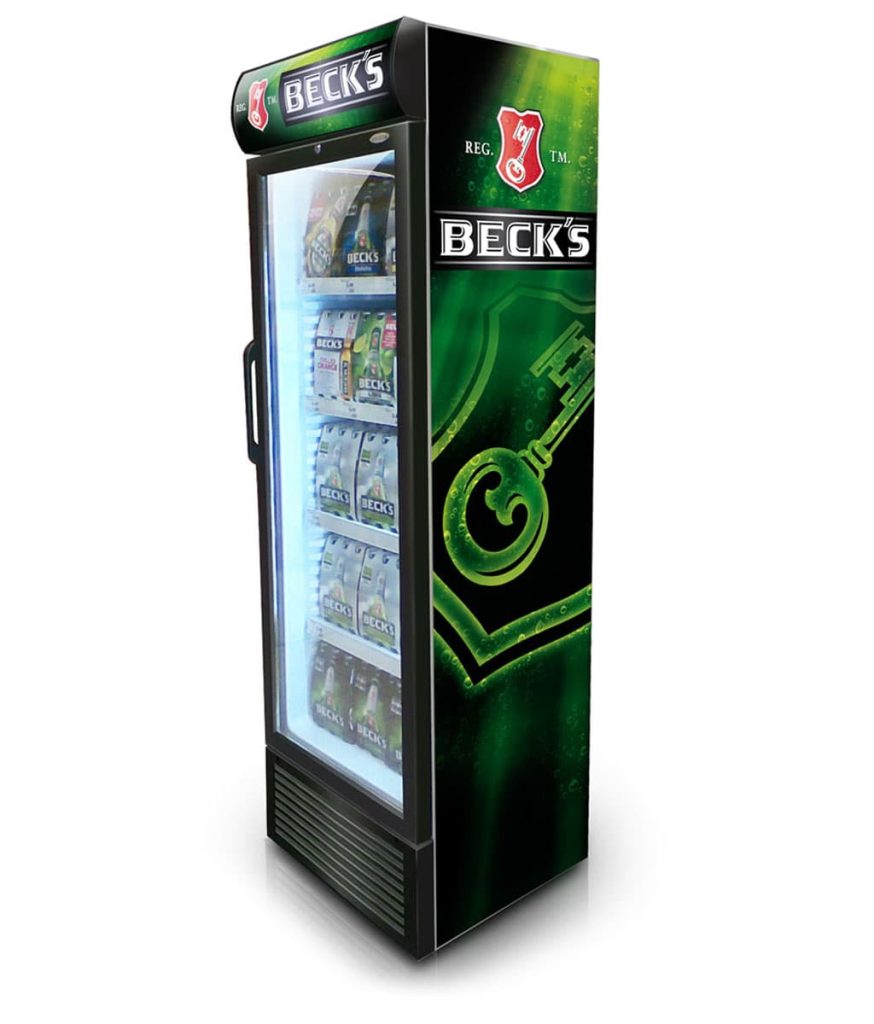
In designing this commercial refrigerator, we combined elements from the Corporate Design Guidelines with Beck’s brand language to achieve high visibility at the Point of Consumption (POC).
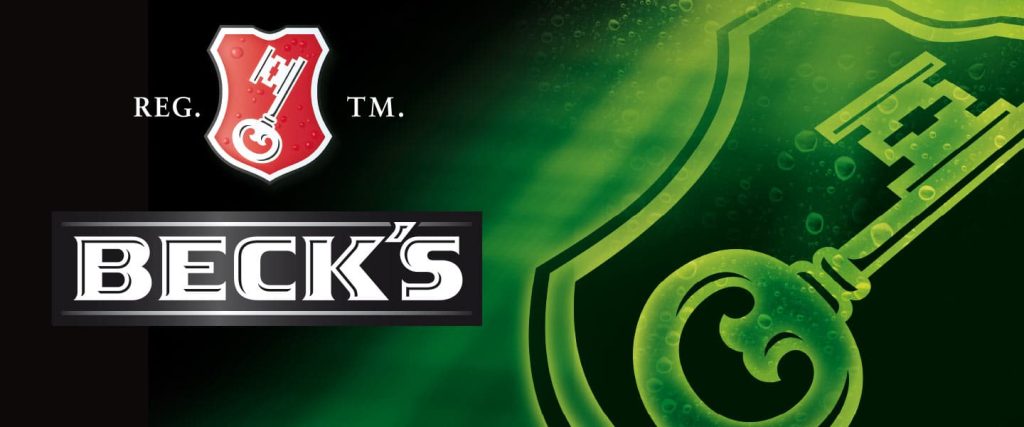
The design of the side panels ensures clear brand recognition even in partially obstructed setups in gastronomy or event settings. Iconic brand elements, such as the crest with the distinctive Bremen key, have been integrated in varying proportions, resulting in strong branding. The color scheme draws inspiration from the energy of parties and events, capturing their energy and translating it into the Beck’s brand world.